

Introduction: Why Your Boots Matter
Choosing the right football boots isn’t just about style; it’s fundamental to your performance, safety, and even the longevity of your footwear. With various soleplates available, two of the most commonly discussed are FG (Firm Ground) and AG (Artificial Ground). Understanding the crucial differences between these two can save you from poor grip, potential injuries, and premature wear on your boots.
What are FG (Firm Ground) Football Boots?
FG boots are the most common type of football boot, designed specifically for playing on firm, natural grass pitches. Think of a well-maintained grass field that isn’t overly wet or extremely dry and hard.
Key Characteristics of FG Boots:
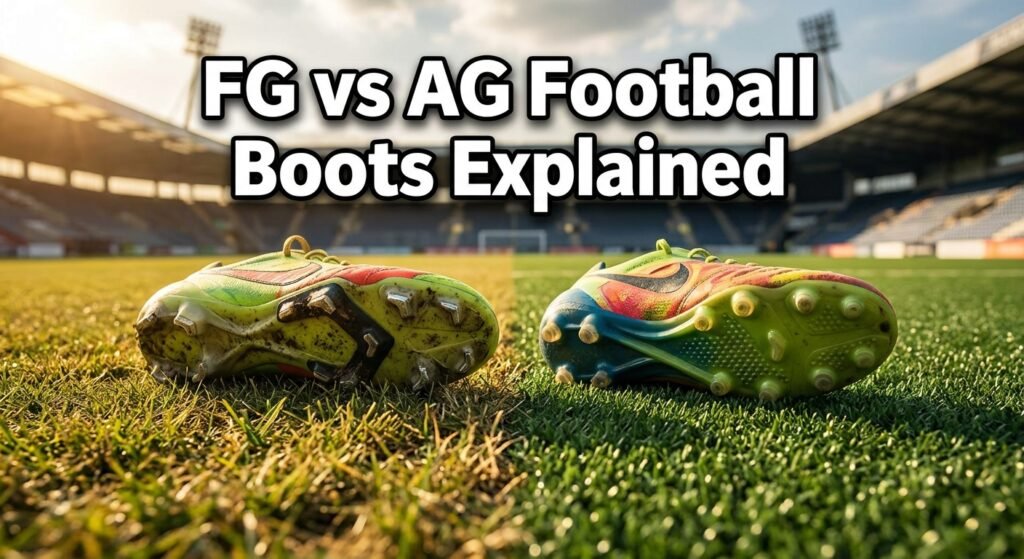
- Studs: Typically feature molded studs, often bladed or conical, that are relatively long and firm.
- Purpose: These studs are designed to penetrate the natural grass and soil, providing maximum grip, traction, and stability for quick changes in direction, acceleration, and powerful pushes.
- Best Use: Ideal for natural grass pitches that are firm but have a slight give.
Using FG boots on the correct surface allows the studs to dig in effectively, transferring pressure evenly and giving you the confidence to perform at your best.
What are AG (Artificial Ground) Football Boots?
AG boots are specially engineered for artificial turf pitches, including modern 3G and 4G surfaces. These pitches are designed to mimic natural grass but have different structural properties that require a specific type of soleplate.
Key Characteristics of AG Boots:
- Studs: Feature a higher number of shorter, often hollowed-out, conical, or rounded studs compared to FG boots.
- Purpose: The numerous, shorter studs distribute pressure more evenly across the artificial surface, reducing stress on your joints (knees and ankles). They provide optimal grip without getting stuck in the synthetic fibres, which can lead to injuries or damage to the pitch.
- Best Use: Essential for artificial grass pitches (astroturf, 3G, 4G).
Many artificial pitch facilities actually mandate the use of AG boots to protect the playing surface from damage.
FG vs AG: The Core Differences
| Feature | FG (Firm Ground) Boots | AG (Artificial Ground) Boots |
|---|---|---|
| Intended Surface | Firm, natural grass pitches | Artificial turf (3G, 4G, astroturf) |
| Stud Type | Fewer, longer, often bladed or conical | More numerous, shorter, hollowed, conical, or rounded |
| Traction Mechanism | Penetrates natural soil for grip | Distributes pressure on synthetic fibres; prevents snagging |
| Injury Risk (Misuse) | High on AG (snagging, joint strain) | Lower grip on natural grass; not ideal but less risky than FG on AG |
| Boot & Pitch Longevity | Decreased on AG (wear and tear) | Optimized for AG surfaces |
Can You Use FG Boots on Artificial Grass?
While it might be tempting to use your FG boots on an artificial pitch, it’s strongly advised against it. Here’s why:
- Increased Injury Risk: The longer, more aggressive studs of FG boots can dig too deeply into the artificial turf, getting caught and potentially leading to serious ankle or knee injuries during quick turns and pivots.
- Damage to Boots: The abrasive nature of artificial turf can cause significantly faster wear and tear on FG studs, shortening the lifespan of your boots.
- Damage to Pitch: FG studs can tear or degrade the synthetic fibres of the artificial pitch, which facility owners want to avoid.
Can You Use AG Boots on Natural Grass?
While less hazardous than the reverse, using AG boots on firm natural grass is not ideal. The shorter, more numerous studs may not provide sufficient penetration into the natural ground, leading to reduced grip and stability, especially in wetter conditions.
Making the Right Choice
Ultimately, selecting between FG and AG boots comes down to where you play most often. If you frequently play on both natural and artificial surfaces, investing in a pair of each is the best solution for optimal performance and safety. Some brands also offer MG (Multi-Ground) options, which are a hybrid designed for versatility, though they may not offer the specialized performance of dedicated FG or AG boots.
Conclusion
Don’t underestimate the impact of your soleplate choice. Understanding the distinctions between FG and AG football boots is crucial for every player. By matching your boots to the playing surface, you ensure better grip, reduce the risk of injury, and extend the life of your gear, allowing you to focus on what truly matters: your game.