
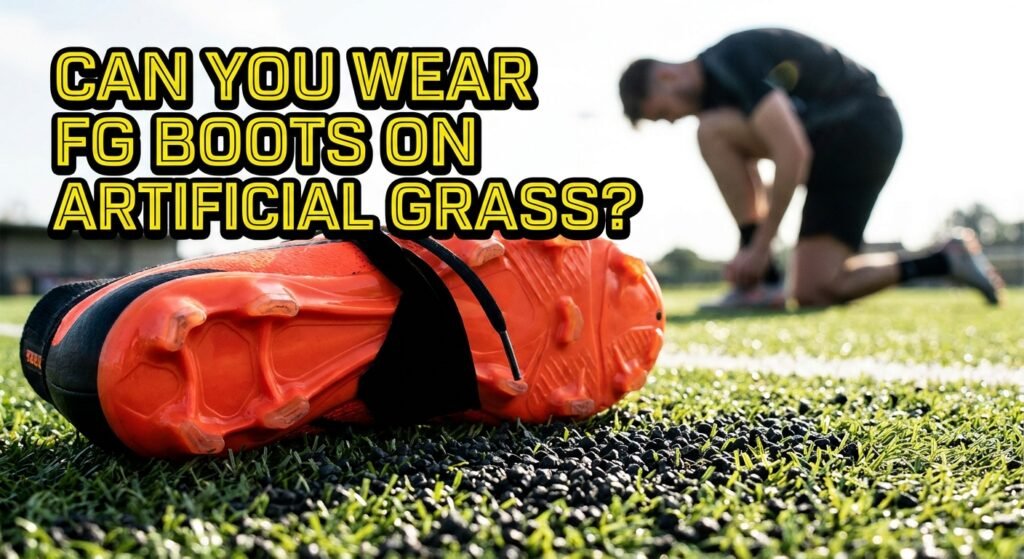

The Short Answer: It’s Not Recommended
Many footballers find themselves wondering if their trusty Firm Ground (FG) boots can double up for sessions on artificial grass (AG) pitches. While it might seem convenient, the consensus among experts and manufacturers is a resounding no. Wearing FG boots on artificial grass comes with significant risks to both your physical well-being and your expensive footwear.
Why FG Boots Are a Bad Match for AG Pitches
The core issue lies in the design of FG boots, which are specifically engineered for natural, firm grass pitches. Here’s why they don’t translate well to artificial turf:
- Excessive Grip and Injury Risk: FG studs are typically longer and often feature a bladed pattern designed to penetrate natural soil for optimal traction. On artificial grass, these studs can get excessively stuck in the turf. This prevents your foot from moving naturally during sharp turns, pivots, or sudden stops, leading to dangerous twisting forces on your ankles, knees, and other joints. Common injuries include ligament damage, such as ACL and meniscus tears.
- Voided Warranty and Accelerated Wear: Football boot manufacturers design their products for specific surfaces. Using FG boots on artificial grass is considered misuse and will almost certainly void your product warranty. Furthermore, the abrasive nature of artificial turf causes FG studs and soles to wear down much faster than intended, significantly reducing the lifespan of your boots.
- Suboptimal Performance: Beyond the safety concerns, FG boots simply don’t perform as well on AG surfaces. The excessive grip can hinder natural movement, leading to a feeling of being ‘stuck’ and potentially affecting your agility, speed, and ball control. You might experience more slippage or mishits due to the inadequate stud pattern for the surface.
The Rise of Artificial Grass Pitches and Specialized Boots
The increasing prevalence of high-quality artificial grass pitches has led to the development of specialized football boots. Artificial Ground (AG) boots are designed with specific features to complement the demands of these surfaces:
- Shorter, Conical Studs: AG boots typically feature a higher number of shorter, often conical, studs. This design provides balanced traction without over-gripping the synthetic fibers, allowing for safe multidirectional movement.
- Enhanced Durability: The materials used in AG boots are often more robust to withstand the abrasive nature of artificial turf, ensuring greater longevity.
- Pressure Distribution: AG soleplates are designed to distribute pressure more evenly across the foot, reducing strain during play on the harder, less forgiving artificial surface.
Are There Any Exceptions?
While some modern, high-quality 3G artificial pitches can mimic the feel of natural grass more closely, and some players might claim to use FG boots on them without immediate issues, the inherent risks remain. Even on newer pitches, the long-term stress on your joints and the accelerated wear on your boots are factors to consider.
The Verdict: Invest in the Right Boots
For your safety, comfort, and the longevity of your football boots, it is always best to use the appropriate footwear for the playing surface. If you frequently play on artificial grass, investing in a pair of dedicated Artificial Ground (AG) or Multi-Ground (MG) boots is a wise decision. These boots are engineered to provide optimal performance, safety, and durability on synthetic turf, allowing you to focus on your game without worrying about injuries or damaging your gear.